Tuesday, October 29, 2013

Invest in Your Gum Health

Photograph: Jutta Klee/ableimages


It's never too early to start safeguarding your physical health and appearance. None of us can stop the clock, but there's plenty you can do to keep yourself looking and feeling as good as possible. Invest some time and money in wellbeing routines now and your future self will thank you: you'll save yourself the stress of potentially expensive and time-consuming treatments further down the line.

When it comes to establishing how best to care for your personal health, choosing the right products is important. The Guardian and Oral-B joined forces with pollster ICM to quiz more than 2,000 UK adults about what they consider important, and how they spend their money, when it comes to health and fitness.
Skincare products, such as body lotion and moisturiser, are a major expenditure. Of those surveyed, 22% said they were most likely to spend money on these beauty accessories. Another 22% revealed they were most likely to splash out on bathing products, such as shower gel and bath foam.

The survey revealed that taking care of oral health is seen as a top priority for most people. Teeth are the number one concern for most people (35%) in terms of their general health and wellbeing. A third of respondents (33%) said they were most likely to spend their money on toothpaste, toothbrushes and mouthwash, to keep teeth healthy and their breath fresh, and to make sure their smile looks good.

This survey makes for encouraging reading because, in terms of safeguarding your future health, oral hygiene is hugely important. Gum problems can often lead to an unwanted session in the dentist's chair, and can prove expensive to treat too. But by taking care of your gums at any age, you're helping to protect yourself against problems that can affect your looks and your wallet.

It's vital to look after your skin and body, too. Daily cleansing, toning and moisturising will undoubtedly pay dividends, helping to keep skin smooth and hydrated. Regular facial massages can also make a difference, improving circulation, enhancing muscle tone and improving surface skin cell renewal.

Also never underestimate the importance of exercise. Any regular, moderately intense aerobic activity, such as fast walking or cycling, combined with activities to strengthen your muscles, keeps you healthier in body and mind.
Spend time now, save money later

Dental treatment can be costly and gum problems can start at any age. Preventing the onset of gum problems is the best way to invest in your future oral health. Use a great-quality toothpaste twice a day. Oral-B's Pro-Expert Premium Gum Protection Toothpaste reduces and helps to prevent gum problems in just four weeks. It fights tartar, reduces plaque and has a whitening effect to keep your smile beautiful. Complete your oral care routine with Oral-B's plaque-reducing Pro-Expert Premium Floss and Multi-Protection Mouthwash.

Source: The Guardian


Thursday, October 24, 2013

Halloween 2013: Best types of candy for your dental health


(WJLA) - If you're a parent trying to figure out how to handle the candy deluge that comes with children and Halloween, a national dental company says that there are certain types of sweets that are better for your teeth than others.


Tossing aside any idea that candy of any sort is healthy, Delta Dental says that if you're looking out for your child's teeth - or yours, because let's face it, you'll eat some candy too - sugar-free or powdery candy is the best bet for your dental health.

This includes chocolate bars, which Delta's chief dental officer says dissolves quickly and doesn't stick to teeth.

When sugar remains on teeth for extended periods, bacteria feeds on it and produces cavity-causing acid," Delta CDO Michel Couret said in a release.

No candy or sweets are good for your teeth in general, Couret says, but varieties of hard and chewy candy certainly can cause more pronounced damage to teeth than others.

The chances of your kid's stash being full of chocolate is inordinately high, anyway - a survey indicates that 86 percent of children will eat it on or shortly after Halloween.


Shutterstock / gosphotodesign

Source: WJLA.com


Tuesday, October 22, 2013

4 Dental Health Tips and Preventive Measures

Proper dental care starts at a very early age and if you take care of your teeth, it is going to last for your lifetime. Most people are aware of the benefits of dental health but yet very few actually pay attention to their teeth. Each person will have two sets of teeth, one from the age of seven month to around 10 years and another set of permanent teeth that will last your whole lifetime.

Taking care of your teeth will ensure that they stay strong and also prevent you from getting dental problems. Here are some tips you can use to take care of your teeth.

Image Via ForHealths.com
The Basics

Obviously it starts with the basics; how you brush, what toothbrush to use, how to floss, etc. The best brush to use for brushing your teeth is one with soft bristles. Though it may seem that the hard bristles clean your teeth faster, it actually damages your gums. Use a soft-bristled toothbrush to brush your teeth and remove plaque and food particles. When choosing the toothbrush, choose one with which you can navigate to all the corners of your mouth.

Flossing is very important and helps remove all food particles and plaque that is stuck between your teeth. Flossing daily will help prevent tooth decay and improve your breath. Use a good mouthwash to kill all bacteria that causes bad breath.

Dental Health Tips and Preventive Measures

Here are some tips and preventive measures you can use to take care of your teeth.


  •     Food & Beverages – A balanced diet is important for your body and a bad diet will lead to bad teeth. Since food goes into your mouth first, you should take care of what you eat and drink. Natural food like yogurt, nuts, fruits and lean meat are rich in calcium and phosphorus which is important for your teeth. Avoid sugary foods as they are bad for your teeth. Avoid or keep to a minimum the number of cups of coffee, tea or coloured sodas you drink.  If possible brush your teeth after a meal or at least brush your teeth twice daily.
  •     Gum Disease – Gum disease is caused by a variety of factors like; cigarette smoking, certain medication, hereditary and genetic factors to name a few. The two types of gum diseases are gingivitis and periodontitis. To prevent gum disease brush and floss your teeth regularly to remove plaque. If tartar is present in the teeth, then you will need to visit a dentist to have your teeth cleaned.
  •     Dry Mouth – Dry mouth (xerostomia) is when the salivary glands do not work properly due to disease or certain medication. This condition will make it difficult to eat, swallow, speak and taste. Preventive measures for dry mouth include, drinking lots of water, and avoiding tobacco, sweets, caffeine and alcohol. You can also visit your dentist for medication to fight dry mouth.


  •     Bad Breath – Over 40% of adults suffer from bad breath. Bad breath is normally caused by accumulated bacteria in the mouth. To prevent bad breath, avoid foods with strong odour like garlic and onions, avoid smoking and brush and floss your teeth twice a day. You can use a rubber tongue cleaner to remove bacteria and germs that contribute to bad breath. You can also visit your dentist to check if your bad breath is due to gum disease.


Your teeth are important and it is vital to take good care of them. If you suspect you have gum diseases or any tooth problem, visit a dentist right away and take care of your teeth and gums.


Source: ForHealths.com

Saturday, October 19, 2013

Halloween Can Be Scary, Especially for Kids' Teeth

Your kids may be ready to indulge in sweet treats this Halloween, but don't let the holiday turn into an oral health nightmare. To keep your children's smiles safe from creepy cavities this season and all year-round, consider these tips from the Academy of General Dentistry (AGD).

Don't Get Stuck

"Sticky, chewy candies are cavity-causing culprits," says AGD spokesperson Connie White, DDS, FAGD. "Gummies, taffy, caramel—they all get stuck in the pits and grooves of teeth, where it's nearly impossible for saliva to wash them away. The longer that candy remains stuck in the teeth, the higher the risk of developing cavities." Encourage children to brush their teeth following candy consumption. If a toothbrush isn't handy, says Dr. White, give them a glass of water to help swish away the sugars.

If the candy is sour, however, hold off on the brushing. Sour candy is likely acidic, so it's best to wait at least 30 minutes to an hour before brushing. The action of brushing can actually spread the acid onto more tooth surfaces, increasing its erosive action on tooth enamel.

Eat, Then Treat

On Halloween night, allow children to enjoy a few pieces of candy, but only after they've eaten a nutritious meal.

"Chewing during a meal stimulates saliva, which has protective enzymes and minerals to cleanse the teeth and protect against cavities," says AGD spokesperson Mark Malterud, DDS, MAGD. "Plus, eating before treating will give kids nice full tummies, tummies that might have a little less room for candy." 

Do Your Part

When trick-or-treaters visit your home, pass out teeth-friendly treats. For example, sugar-free lollipops, hard candies, and chewing gum are better options than their sugary alternatives. 

"Sugar-free gum actually can help prevent cavities," says Dr. Malterud. "Not only does it dislodge food particles from between the teeth, but it also increases saliva to help wash away the sugars."

Brushing Basics

"No matter what season it is, kids should be brushing their teeth for two minutes twice a day and flossing once a day," advises Dr. White. "It's especially important to brush before bedtime. Otherwise, sugars will linger on the teeth all night long, increasing their risk of cavities.

For more tips on improving your child's oral health, speak with your dentist and visit KnowYourTeeth.com.

Read more: http://www.digitaljournal.com/pr/1515317#ixzz2i9TRg4mf

Wednesday, October 16, 2013

Dental crisis could create 'State of Decay'

Image by CNN 

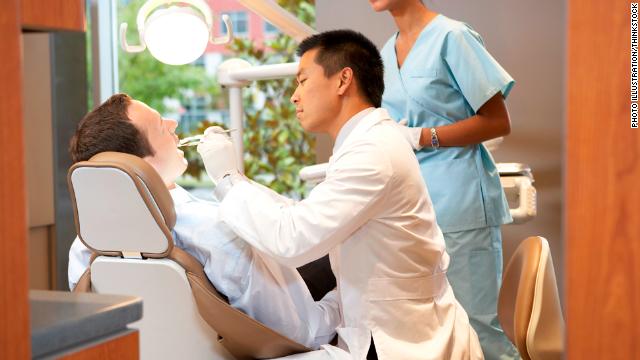
Obamacare expands access to health insurance for tens of millions of people come January 1. Dental care for adults, however, is not included, and experts say we've got a potential oral health care crisis coming.

Studies show that people who have insurance are more likely to get regular dental care. But only about 2% of older Americans have dental insurance of any kind, according to a new report.

"Until we have an expansion of this kind of coverage, and until we have people really recognizing what this means for their overall health, I do believe we have an unimaginable tragedy on our hands," said Beth Truett, president and CEO of Oral Health America.

Truett's organization published the report "State of Decay: Are older Americans coming of age without oral health care?" which shows that baby boomers -- who have, for the most part, kept their natural teeth -- could be facing some serious oral health problems over the next decade. People with low income and racial and ethnic minorities are particularly vulnerable, according to the report.

Dr. Gupta answers Obamacare questions
Gupta: Beware Obamacare scams
Obamacare website still glitchy
McCain: It's no longer GOP vs. Democrats

"It's an issue that is particularly important that is not always talked about," said Ira Lamster, dean emeritus of the Columbia University College of Dental Medicine. "People in the United States are retaining their teeth, and as a result, teeth that have been in use for 50 or 60 or 70 years will have problems."

Neither Medicare nor the Affordable Care Act includes adult dental coverage, although some pediatric dental care is covered. Even the Medigap insurance that adults buy to expand their plans' benefits still won't cover dental procedures. Less than 1% of dental services are covered by Medicare.

And neglected dental health can turn into even bigger medical issues.

"For instance, if you have diabetes and you have gum disease, your metabolic control will be worse," Lamster said. "There is a lot of data showing that periodontal disease can increase your risk for heart attacks and strokes. There are so many ways this can impact your overall health. That is why regular access to care is so important."

The study put together by Oral Health America ranked states in terms of the oral care their populations receive. Seventeen states received a "poor" grade.

The states were evaluated on edentulism, which is the fancy word for total loss of teeth. Other factors included community water fluoridation, adult Medicaid coverage, access to dentists and a state oral health plan that addresses older adults.

Some states' Medicaid programs cover adult dental care. However, of the 17 states that received a "poor" grade for dental care, the majority are led by Republican governors who have refused or are leaning against expanding Medicaid under the Affordable Care Act.

Dental screening that could save your life

Mississippi is ranked the worst. Tennessee and Alabama tied for second to last.

The other states rated as "poor" are Florida, Arizona, Louisiana, Delaware, Utah, Washington, Wyoming, Pennsylvania, Oregon, Montana, Kentucky, Maine, Virginia and California.

"Some of this 'poor' care is in direct relation to the economic changes our country has experienced," Truett said. "A lot of it, though, stems from the fact that some people see this as a tangential kind of medical care."

Emergency room visits for dental health have doubled from about a decade ago. In 1999-2000, there were a reported 1 million cases of adults over 65 who went to the ER for dental problems; in 2009-10, there were 2.3 million cases.

"Dental care is extremely expensive, and the older adult will require the more extensive care," Lamster said. "The frustrating part is that we have some great technology now: Dental implants, for instance, work remarkably well, but they are beyond the means of much of the population."

Not all states fared as badly in the report. Minnesota ranked at the top of the list, with Maryland a close second.

"We wanted to show that there are states that are getting close to having a model kind of care that others could replicate," Truett said.

According to the report, Minnesota ranks high in terms of communities with fluoridated water, a Medicaid program that covers dental care for adults, a state oral health plan that addresses this population and, perhaps consequently, a low rate of edentulism. The report suggests that Minnesota still needs more dentists to serve its population.

There is some good news: The number of federally qualified health centers that provide dental care have increased, and 41 of 50 states have state oral health plans. There is also a bill in Congress that would widen the ACA, Medicare, Medicaid and veterans benefits to include dental health. That legislation, though, is in its very early stages.

The OHA also put together a website toothwisdom.org that offers a handy guide on where you can find dental care in your state. It even gives suggestion on transportation options to these caregivers if an older person is unable to drive.


Souce: CNN 

Saturday, October 12, 2013

Link between dental health, heart disease


See your dentist to prevent a heart attack? Recently, the research journals and popular press have been pointing to a connection between oral health and hygiene and cardiovascular risk. Although there are several mediators, one stands out: periodontal or gum disease.

\The Journal of Periodontology reported that inflammatory effects from periodontal disease, a chronic bacterial infection of the gums, cause oral bacterial byproducts to enter the bloodstream and trigger the liver to produce substances that increase the risk of heart disease.

Getty Images/BananaStock RF
This is even true in patients who are without teeth. Did you know that ill-fitting dentures can create infection and inflammation throughout the mouth that can trigger a systemic effect?

This inflammation is measurable. A substance produced in the body called high-sensitivity C-reactive-protein (HS-CRP) is suspected to play a role in the link between gum disease and heart disease. This test is widely available from traditional labs. Sometimes, CRP is measured in lieu of HS-CRP. The difference? CRP indicates general inflammation while HS-CRP indicates arterial inflammation and increased risk for blood clots.

Some studies estimate the HS-CRP is related to dental health more than 50 percent of the time. For optimal health, your level should be less than 1 percent. Initially thought to be specific to heart disease, it turns out HS-CRP is nonspecific marker of inflammation. Data from many studies have shown that long-standing, low levels of inflammation are at the root of most chronic diseases. Think of it this way: HS-CRP is the smoke . . . and it should put your physician on a search for the fire.

Unfortunately, many adults become lax with their oral health as they age. Frequently, it is because there are no symptoms. We need to think of our mouth as a car, needing frequent oil changes (dental cleanings) and scheduled maintenance (dental exams).

How do you know if you have periodontal disease? The simplest way is to identify periodontal pockets using a periodontal probe. Your dentist and hygienist use such a probe as part of their initial examination as well as your dental cleaning visit. The distance that the probe goes below the gum line is a measure of periodontal damage. A normal measurement is 3 mm. or less. If you have pockets of 5 or more millimeters, these should be evaluated at every cleaning visit.

While your physician and dentist are searching for the cause, proper Omega 3 supplementation and the dietary intake of healthy fats and oils has been shown to reduce HS-CRP. In addition, a low inflammatory diet, weight loss, exercise and other positive lifestyle changes have an impact on HS-CRP (inflammation) and other risk factors for chronic disease. If periodontal health is excellent, there are many other causes of elevated HS-CRP which should be investigated. These include vasculitis, cancer, bone infections, inflammatory bowel disease, diabetes and autoimmune diseases.

Remember, we are chasing smoke. Only by finding the fire can overall health be improved.


Source: Florida Today

Thursday, October 10, 2013

How to take care of your baby’s teeth


The best way to make sure your baby has a healthy mouth – and body – is to practice good oral cleaning, eating and drinking habits at home. Here are a few tips for ensuring that your child has healthy teeth for a lifetime:


Start early!

  • Beginning at birth, wipe your child’s gums with a washcloth or piece of gauze after feeding.
  • As soon as you see the first tooth (usually around 6 months), start bushing your baby’s teeth twice a day with a soft toothbrush and a rice-sized amount of fluoridated toothpaste. Place your baby’s head in your lap to make brushing easier.


Choose healthy food and drinks


  • If you give your baby a bottle at bedtime or naps, fill it with water. Juice, formula, milk and breast milk can cause decay if left in your baby’s mouth.
  • When your child is ready, provide healthy snacks such as cheese, fruits and vegetables.
  • Avoid cavity-causing soda and candy and limit carbohydrate snacks such as crackers and pretzels.
  • Offer water instead of juice. Constantly sipping sweet drinks during the day or snacking on sticky foods can cause tooth decay.


Lift the lip and look
  • Every month, lift your baby’s lip and look for changes on his/her teeth. Tooth decay often starts on the front or back of the front teeth and along the gums.
  • If you notice white or brown spots on the teeth or anything unusual, contact your baby’s physician or dentist.


Check-ups
  • Have your baby’s mouth checked by a dentist or physician by age one, sooner if you notice a problem.
  • During the checkup your dentist or physician should look for signs of early tooth decay, talk about daily tooth care including brushing, and discuss your baby’s diet and eating habits.
  • Ask whether your child needs a fluoride varnish and fluoride drops or tablets (if your water does not contain fluoride).