Diabetes can put you at greater risk of tooth decay, gingivitis and periodontitis. Here’s how to help keep your smile healthy and bright.
Taking charge of your diabetes means being vigilant about the health of every part of your body—and that includes your mouth.
Elevated blood sugar levels increase your risk of tooth decay, early gum disease (gingivitis) and advanced gum disease (periodontitis.) But if you’re careful, you can keep your teeth and gums healthy—and your smile bright.
Tooth care basics for people with diabetes
“Good diabetes control is key,” says Todd Coy, DMD, of the Cleveland Clinic. “If you have diabetes, your body’s ability to fight bacteria is reduced, so you don’t deal as well with issues like gum disease. But people who are diligent with their diabetes can reduce the risk of tooth decay and other oral problems to near-normal levels.”
Here’s how to keep your teeth and gums healthy:
Tell your dentist that you have diabetes, Coy says. Remind him when you go for checkups, and make sure he has the phone number of your endocrinologist.
If you have tooth pain, don’t ignore it, says Ira B. Lamster, DDC, M M.Sc, professor of health policy and management at the Mailman School of Public Health, Columbia University College of Dental Medicine. “The whole idea of prevention is very important,” he says. “If you think something is developing, do not delay. See your dentist.” If you get an infection in your mouth, it can be more severe than in someone without diabetes, which is all the more reason to contact your dentist right away.
Brush after meals and floss at least once a day, advises Coy. Individuals with diabetes tend to get more cavities at the root line of the teeth, Lamster says, and, as Coy points out, “As the gums recede, the vulnerable root surface is exposed.” Also try to avoid refined carbs and sugary foods. “If you are taking in a lot of these, this further increases your risk of tooth decay.”
Use a toothpaste with fluoride, and a soft-bristled toothbrush. An electric toothbrush can make the job much easier. Be sure to avoid vigorous scrubbing as this can irritate your gums.
Tooth Troubleshooting
It’s not uncommon for individuals with diabetes to have a reduction in saliva, which can increase your risk of cavities. Check out one of the many saliva substitutes available to see if one will work for you. If you have this symptom, tell your dentist and your physician, Lamster recommends.
Watch out for warning signs of gum disease, which include gum bleeding, swelling and redness.
If you develop any of these symptoms, tell your dentist right away. Also tell him if you feel any loose teeth. The earlier treatment for periodontal disease begins, the better it is for your oral health.
Finally, if you smoke, quit. You’re at an increased risk for gum disease if you smoke, so find out about all the options to help you break the habit once and for all.
Source: El Dorado Springs Sun
Thursday, August 22, 2013

Friday, August 16, 2013
Dental health tips: A glass of milk after eating sugary cereals may prevent cavities

Dry ready-to-eat, sugar-added cereals combine refined sugar and starch. When those carbohydrates are consumed, bacteria in the dental plaque on tooth surfaces produce acids, says Christine Wu, professor of pediatric dentistry and director of cariology, who served as principal investigator of the study.
The research is published in the July issue of the Journal of The American Dental Association.
Reports have shown that eating carbohydrates four times daily, or in quantities greater than 60 grams per person per day, increases the risk of cavities.
The new study, performed by Wu's former graduate student Shilpa Naval, involved 20 adults eating 20 grams of dry Froot Loops cereal, then drinking different beverages — whole milk, 100% percent apple juice, or tap water.
Plaque pH, or acidity, was measured with a touch microelectrode between the premolar teeth before eating; at two and five minutes after eating; and then two to 30 minutes after drinking a liquid.
The pH in plaque dropped rapidly after consuming cereal alone, and remained acidic at pH 5.83 at 30 minutes. A pH below 7 is acidic; a pH greater than 7 is basic. Pure water has a pH close to 7.
Participants who drank milk after eating sugary cereal showed the highest pH rise, from 5.75 to 6.48 at 30 minutes. Those who drank apple juice remained at pH 5.84 at 30 minutes, while water raised the pH to 6.02.
Fruit juices are considered healthy food choices, but the added sugar can be a risk to dental health, Wu said.
"Our study results show that only milk was able to reduce acidity of dental plaque resulting from consuming sugary Froot Loops," said Naval, who is currently a fellow at the Centers for Disease Control and Prevention in Atlanta. "We believe that milk helped mitigate the damaging effect of fermentable carbohydrate and overcome the previously lowered plaque pH."
Milk, with a pH ranging from 6.4 to 6.7, is considered to be a functional food that fights cavities because it promotes tooth remineralization and inhibits the growth of plaque, Wu said.
Wu says most consumers think that since milk is considered to be cavity-fighting, acid production by plaque bacteria can be minimized by mixing it with cereal. However, in an unpublished study in her lab, it was discovered that the combination of Froot Loops and milk became syrupy. Eating cereal combined with milk lowered plaque pH to levels similar to that obtained after rinsing with a 10% sugar solution.
Eating sugar-added cereal with milk, followed by drinking fruit juice is thus a highly cavity-causing combination, Wu said.
Diet plays an important role in oral health, Wu said. Studies of food intake and cavities have focused mainly on the sugar, or carbohydrate, content. Fewer studies have looked at how combinations of food, and the order in which they are eaten, may help fight cavities.
"Results from a previous study suggested that the last food item consumed exerts the greatest influence on subsequent plaque pH," she said. For example, eating cheese after a sugary meal reduces acid production, and consumers can modify their diet in such a way as to prevent the cavity-causing effects of sugary foods."
"If understood and implemented properly, food sequencing can be used as a public health educational tool to maintain and preserve good oral health," said Naval.
Other contributors included Drs. Anne Koerber, Larry Salzmann, Indru Punwani, and Bradford Johnson, all of the dentistry faculty at UIC. The research was supported by the college's pediatric dentistry department.
UIC ranks among the nation's leading research universities and is Chicago's largest university with 27,500 students, 12,000 faculty and staff, 15 colleges and the state's major public medical center. A hallmark of the campus is the Great Cities Commitment, through which UIC faculty, students and staff engage with community, corporate, foundation and government partners to improve the quality of life in metropolitan areas around the world.
Source: Dentistry IQ
Thursday, August 15, 2013
5 Cheap And All-Natural Tips For Healthy Teeth
Think you can’t afford a beautiful smile and be a healthy kisser? Think again!
 Dental health affects 90% of overall health. In fact, the mouth acts as a barometer, picking up diseases and problems before you see them in the rest of the body. This characteristic is important to holistic dentists because we not only care about the health of your teeth, but of your whole being. Therefore, if issues can be identified in the mouth first, further problems and diseases can be prevented down the road, including cardiovascular, immune, inflammatory, and neurodegenerative diseases.
By taking small, but significant, steps to care for the health of your teeth now, you can also prevent the price of costly doctor bills later.
Here are five steps you can take to keep the health of your mouth and body in check, without breaking the bank:
1. Avoid sugary foods and drinks.
It’s well known that sugar causes cavities and plaque. But what might not be as obvious is that no matter how thoroughly one brushes, it is difficult to remove all sweeteners from the teeth. This is because most sugary foods and drinks contain corn syrup – a sweetener that coats the teeth and hides in cracks and crevices, giving it time to fester and decay your teeth.
2. Brush for two to three minutes per brushing.
The time you put into brushing makes a difference. Even if you stopped eating sweets and brushed your teeth twice daily, but only for 30 seconds, you would miss out on the benefits of brushing.
3. Hydro floss daily.
Flossing removes little bits of food, but it does not kill bacteria. In fact, it can actually spread bacteria, and it's bacteria that causes diseases in your mouth and body. Floss instead with an oral irrigator (we like Hydro Floss), which can get into those hard to reach places and actually remove bacteria, germs, and food debris.
Also, make sure you drink plenty of water. Water will help flush out the toxins in your body and hopefully will replace some of the sugary drinks you may be consuming.
4. Maintain a balanced pH.
A low pH in your mouth is an acidic environment, which is a breeding ground for unwanted bacteria and leaves you more susceptible to cavities and gum disease. Keep your pH at an optimal level by eating a diet rich in whole foods, including plenty of fruits and vegetables.
5. Avoid fluoride.
It may seem like fluoride is good for us, because it's in everything: our water, toothpaste, and mouth rinses. However, just because fluoride is widely used does not mean that it's good for you. Consider that pesticides are used on fruits and vegetables — but are pesticides good for you? Too much fluoride in your body can cause a number of terrible side effects, including nausea, vomiting, diarrhea, abdominal pain, upset stomach, headaches, tremors, seizures, muscular weakness, cancer, arthritis, white spots on the teeth, and death.
So put away your pocket book, pucker up and smile! Give your mouth, and your health the attention it deserves, and treat it to a little loving prevention.
Source: Mind Body Green
 Dental health affects 90% of overall health. In fact, the mouth acts as a barometer, picking up diseases and problems before you see them in the rest of the body. This characteristic is important to holistic dentists because we not only care about the health of your teeth, but of your whole being. Therefore, if issues can be identified in the mouth first, further problems and diseases can be prevented down the road, including cardiovascular, immune, inflammatory, and neurodegenerative diseases.
 By taking small, but significant, steps to care for the health of your teeth now, you can also prevent the price of costly doctor bills later.
Here are five steps you can take to keep the health of your mouth and body in check, without breaking the bank:
1. Avoid sugary foods and drinks.
It’s well known that sugar causes cavities and plaque. But what might not be as obvious is that no matter how thoroughly one brushes, it is difficult to remove all sweeteners from the teeth. This is because most sugary foods and drinks contain corn syrup – a sweetener that coats the teeth and hides in cracks and crevices, giving it time to fester and decay your teeth.
2. Brush for two to three minutes per brushing.
The time you put into brushing makes a difference. Even if you stopped eating sweets and brushed your teeth twice daily, but only for 30 seconds, you would miss out on the benefits of brushing.
3. Hydro floss daily.
Flossing removes little bits of food, but it does not kill bacteria. In fact, it can actually spread bacteria, and it's bacteria that causes diseases in your mouth and body. Floss instead with an oral irrigator (we like Hydro Floss), which can get into those hard to reach places and actually remove bacteria, germs, and food debris.
Also, make sure you drink plenty of water. Water will help flush out the toxins in your body and hopefully will replace some of the sugary drinks you may be consuming.
4. Maintain a balanced pH.
A low pH in your mouth is an acidic environment, which is a breeding ground for unwanted bacteria and leaves you more susceptible to cavities and gum disease. Keep your pH at an optimal level by eating a diet rich in whole foods, including plenty of fruits and vegetables.
5. Avoid fluoride.
It may seem like fluoride is good for us, because it's in everything: our water, toothpaste, and mouth rinses. However, just because fluoride is widely used does not mean that it's good for you. Consider that pesticides are used on fruits and vegetables — but are pesticides good for you? Too much fluoride in your body can cause a number of terrible side effects, including nausea, vomiting, diarrhea, abdominal pain, upset stomach, headaches, tremors, seizures, muscular weakness, cancer, arthritis, white spots on the teeth, and death.
So put away your pocket book, pucker up and smile! Give your mouth, and your health the attention it deserves, and treat it to a little loving prevention.
Source: Mind Body Green
Sunday, August 11, 2013
Oral health linked to diseases
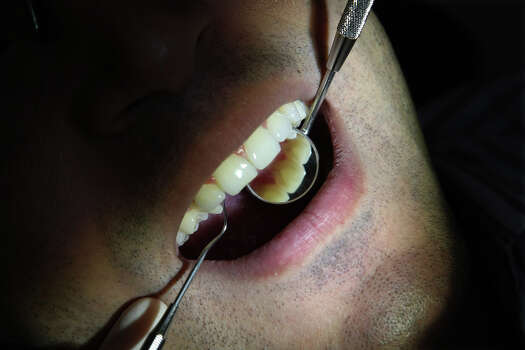 |
| Photo Via My San Antonio |
Turns out gum disease is associated with a greater risk of developing diabetes, heart disease and even pregnancy complications. And a study released recently found evidence that bacteria linked to gingivitis traveled to brains afflicted by Alzheimer's disease, hinting at a role in dementia.
As the latest research deepens scientists' understanding of the link between dental health and disease, the potential implications are coming into focus. Something as simple as treating gum disease, a neglected, often painless condition, could limit damage from some of the world's most widespread and costly illnesses.
About half of all adults have some form of gum disease, says Iain Chapple, a professor of periodontology at the University of Birmingham in England. That shows the potential impact of healthier mouths, he said.
“Even if it's just going to delay onset of arthritis or cardiovascular disease, if you add it up in fiscal terms, the savings would be huge,” said Chapple, who co-led a recent review of research on gum disease's links with diabetes.
Heart disease and diabetes are costly illnesses and are becoming more prevalent around the world.
Heart disease, the world's biggest killer, costs the U.S. alone $108.9 billion each year, according to the American Heart Association. Diabetes, which most frequently occurs in older people who are overweight and sedentary, costs $245 billion last year, according to the American Diabetes Association.
The link to an increased risk of diabetes, heart disease and pregnancy complications was highlighted in the research review organized by Chapple and other scientists from the U.S. and Europe. Colgate-Palmolive Co. funded the review.
Colgate, a New York-based maker of toothpaste and toothbrushes, and other makers of dental-hygiene products such as Johnson & Johnson, Procter & Gamble Co. and Royal Philips NV stand to benefit if more connections between oral health and disease are established.
What gum disease has in common with other illnesses is inflammation, a response by the immune system to invaders that features swelling, redness, heat and pain as fluids and white blood cells rush to the affected area.
Bugs can travel from the mouth by being swallowed, inhaled or by entering the bloodstream through the gums, according to Frank Scannapieco, chairman of the department of oral biology at the University of Buffalo's School of Dentistry.
If harmful bacteria and viruses spread from the mouth, that could explain inflammation that leads to disease elsewhere in the body.
“The real question, the so-what question, is does it act as a risk factor with other medical conditions,” said Ian Needleman, a professor at University College London Eastman Dental Institute. “There's a substantial body of research that connects them, but we are a long way from demonstrating causation. Can there be smoke without fire?”
To answer that question, larger and more expensive studies are needed, and funding is scarce, according to Needleman. “The field is wide open and the gaps in knowledge are large,” Chapple's group wrote in the Journal of Clinical Periodontology in April.
Scientists are trying to fill that void. At least four trials are exploring whether dental treatment improves diabetics' control of their condition, according to clinicaltrials. gov, a U.S. government website. Colgate-Palmolive is collaborating on one of the trials.
To prevent gum disease, the American Academy of Periodontology recommends brushing both teeth and tongue after meals, flossing and rinsing with a mouthwash once daily and seeing a periodontist. Eating a healthy diet rich in vitamin C and stopping smoking also help.
“Prevention is better than intervention,” said Steve Engebretson, the chairman of the department of periodontology and implant dentistry at New York University's College of Dentistry.
If the diabetes research shows a benefit, patients would have another way to improve their health in addition to diet, exercise and medication.
One of the studies, a U.S. trial of about 600 people, has been completed, said Engebretson, the lead researcher. It builds on previous findings that show treating gum disease improves a measure of blood sugar.
Heart disease is another promising area for research. The link between it and gum disease is “robust and significant” though it isn't clear whether gum disease can cause heart disease, Chapple said. Only long-term trials can establish a connection, he said.
“I was the biggest cynic” about the link between the two illnesses, Chapple said. “But I've changed my view. The evidence is very strong now and I'll be surprised if there isn't a causal role.”
The British research team behind the Alzheimer's study is seeking more funding for a larger trial that would track recently diagnosed patients, said StJohn Crean, the dean of the School of Medicine and Dentistry at the University of Central Lancashire in England.
The goal of the trial would be to show whether taking action against gum disease can slow the progression of the dementia, according to Crean.
People should care for their teeth regardless of gum disease's links to other illnesses, Needleman said.
“There are over 1,000 different kinds of bacteria in your mouth,” Chapple said.
Latest Headlines
For more info read http://www.mysanantonio.com/lifestyle/health-family/article/Oral-health-linked-to-diseases-4721220.php
Saturday, August 10, 2013
Can Poor Dental Health Cause Dementia?
Poor dental health and gum disease may be linked to Alzheimer's disease and dementia, a new study from the University of Central Lancashire School of Medicine and Dentistry suggests.
Although past studies have suggested a link between oral health and dementia, this is the first to pinpoint a specific gum disease bacteria in the brain.
Researchers looked at donated brain samples of 10 people without dementia and 10 people with dementia. They found the bacteria Porphyromonas gingivalis in the brains of four of those with dementia.
This bacteria may play a role in changes in the brain in Alzheimer's disease, contributing to symptoms including confusion and failing memory.
Everyday activities like eating and tooth brushing, and some dental treatment, could allow the bacteria to enter the brain. "We are working on the theory that when the brain is repeatedly exposed to bacteria and/or debris from our gums, subsequent immune responses may lead to nerve cell death and possibly memory loss," says Sim Singhrao, PhD, a senior research fellow at the university.
This could mean that visits to the dentist could be vital for brain health, she says.
"The future of the research aims to discover if P. gingivalis can be used as a marker, via a simple blood test, to predict the development of Alzheimer's disease in at-risk patients."
For now, "it remains to be proven whether poor dental hygiene can lead to dementia in healthy people," says St John Crean, dean of the School of Medicine and Dentistry. "It is also likely that these bacteria could make the existing disease condition worse."
Reacting to the findings, Alison Cook, director of external affairs at the U.K.'s Alzheimer's Society, said: "There have been a number of studies looking at the link between dementia and inflammation caused by factors including poor dental health, but this is not yet fully understood. This small study suggests that we need more research into this important area."
Also reacting to the study, Simon Ridley, PhD, head of research at Alzheimer's Research U.K., said: "We don't know whether the presence of these bacteria in the brain contributes to the disease, and further research will be needed to investigate this. It is possible that reduced oral hygiene, and therefore P. gingivalis infection, could be a consequence of later-stage Alzheimer's, rather than a cause.
"Other studies have suggested that infections, including oral infections, could be linked to Alzheimer's, and there is ongoing research in this area."
He said it will be important for future studies to consider looking back at dental records, to match these with oral hygiene during a person's life.
Source: Web MD
Although past studies have suggested a link between oral health and dementia, this is the first to pinpoint a specific gum disease bacteria in the brain.
Researchers looked at donated brain samples of 10 people without dementia and 10 people with dementia. They found the bacteria Porphyromonas gingivalis in the brains of four of those with dementia.
This bacteria may play a role in changes in the brain in Alzheimer's disease, contributing to symptoms including confusion and failing memory.
Everyday activities like eating and tooth brushing, and some dental treatment, could allow the bacteria to enter the brain. "We are working on the theory that when the brain is repeatedly exposed to bacteria and/or debris from our gums, subsequent immune responses may lead to nerve cell death and possibly memory loss," says Sim Singhrao, PhD, a senior research fellow at the university.
This could mean that visits to the dentist could be vital for brain health, she says.
"The future of the research aims to discover if P. gingivalis can be used as a marker, via a simple blood test, to predict the development of Alzheimer's disease in at-risk patients."
For now, "it remains to be proven whether poor dental hygiene can lead to dementia in healthy people," says St John Crean, dean of the School of Medicine and Dentistry. "It is also likely that these bacteria could make the existing disease condition worse."
Reacting to the findings, Alison Cook, director of external affairs at the U.K.'s Alzheimer's Society, said: "There have been a number of studies looking at the link between dementia and inflammation caused by factors including poor dental health, but this is not yet fully understood. This small study suggests that we need more research into this important area."
Also reacting to the study, Simon Ridley, PhD, head of research at Alzheimer's Research U.K., said: "We don't know whether the presence of these bacteria in the brain contributes to the disease, and further research will be needed to investigate this. It is possible that reduced oral hygiene, and therefore P. gingivalis infection, could be a consequence of later-stage Alzheimer's, rather than a cause.
"Other studies have suggested that infections, including oral infections, could be linked to Alzheimer's, and there is ongoing research in this area."
He said it will be important for future studies to consider looking back at dental records, to match these with oral hygiene during a person's life.
Source: Web MD
Monday, August 5, 2013
California Dental Association Offers Tips to Avoid Dental Emergencies
Being at the peak of the summer weather, parents and children often take advantage of the warm season by enjoying more recreational sports and outdoor activities, which can increase injury potential for the teeth and mouth. For safe oral health all year long, and especially during this season, CDA is offering helpful tips to avoid oral injuries and dental emergencies.
While enjoying popular summer activities like swimming, biking or playing soccer, and to prevent dental accidents — including teeth that have been knocked out, broken or forced out of position — CDA suggests wearing a mouthguard.
“Accidents happen. But there are a number of things you can do to help prevent them. Wearing a mouthguard is a great example,” said CDA President Lindsey Robinson, DDS, a pediatric dentist.
If a dental emergency does occur, CDA suggests the following tips for the best possible outcome.
If a tooth is knocked out, attempt to find the tooth and immediately call your dentist for an emergency appointment. Handle the tooth gently and, being careful not to damage the surface of the root, place the tooth in a Save-A-Tooth kit or immerse in milk for transport to the dentist.
“If a tooth is knocked out, do not try placing the tooth back into the socket. This could cause more damage to the injury,” Robinson said. “If it’s within about 30 minutes of the injury, it may be possible to re-implant the tooth. And knowing what to do in a dental emergency can be the difference between losing a tooth and being able to save it.”
Should a tooth be pushed out of place, reposition it to its normal alignment with very light finger pressure, do not force the tooth into the socket. Instead, hold the tooth in place with a moist tissue or gauze and get to your dentist as quickly as possible.
For a broken or fractured tooth, rinse the area with warm water and use cold compresses on the injury to keep any swelling down.
“Treatment for a fractured tooth will depend on the severity of the fracture,” said Robinson. “Regardless of the damage, you should consult your dentist as soon as possible to determine appropriate treatment.”
If there’s an injury to the soft tissues of the mouth, including the cheek, lips or tongue, clean the wound right away and get to the emergency room for necessary suturing and wound repair. Bleeding from a tongue laceration can be reduced by pulling the tongue forward and using gauze to place pressure on the wound area.
Keep teeth healthy throughout the year by brushing with a fluoride toothpaste for two minutes, twice a day, avoiding sugary drinks like soda, flossing daily and visiting a dentist for a complete dental checkup on a regular basis.
Read more: Digital Journal
While enjoying popular summer activities like swimming, biking or playing soccer, and to prevent dental accidents — including teeth that have been knocked out, broken or forced out of position — CDA suggests wearing a mouthguard.
“Accidents happen. But there are a number of things you can do to help prevent them. Wearing a mouthguard is a great example,” said CDA President Lindsey Robinson, DDS, a pediatric dentist.
If a dental emergency does occur, CDA suggests the following tips for the best possible outcome.
If a tooth is knocked out, attempt to find the tooth and immediately call your dentist for an emergency appointment. Handle the tooth gently and, being careful not to damage the surface of the root, place the tooth in a Save-A-Tooth kit or immerse in milk for transport to the dentist.
“If a tooth is knocked out, do not try placing the tooth back into the socket. This could cause more damage to the injury,” Robinson said. “If it’s within about 30 minutes of the injury, it may be possible to re-implant the tooth. And knowing what to do in a dental emergency can be the difference between losing a tooth and being able to save it.”
Should a tooth be pushed out of place, reposition it to its normal alignment with very light finger pressure, do not force the tooth into the socket. Instead, hold the tooth in place with a moist tissue or gauze and get to your dentist as quickly as possible.
For a broken or fractured tooth, rinse the area with warm water and use cold compresses on the injury to keep any swelling down.
“Treatment for a fractured tooth will depend on the severity of the fracture,” said Robinson. “Regardless of the damage, you should consult your dentist as soon as possible to determine appropriate treatment.”
If there’s an injury to the soft tissues of the mouth, including the cheek, lips or tongue, clean the wound right away and get to the emergency room for necessary suturing and wound repair. Bleeding from a tongue laceration can be reduced by pulling the tongue forward and using gauze to place pressure on the wound area.
Keep teeth healthy throughout the year by brushing with a fluoride toothpaste for two minutes, twice a day, avoiding sugary drinks like soda, flossing daily and visiting a dentist for a complete dental checkup on a regular basis.
Read more: Digital Journal
Saturday, August 3, 2013
Dental health: Our top 10 dental health tips
Dental health tip # 1: Brush twice a day
Dr Ajay says that 70% of dental problems can be solved, if we brush our teeth thoroughly. Make sure you brush your teeth twice a day for a minimum of 2-4minutes, to get rid of plaque.
Dental health tip # 2: Use good products
To get rid of all the food particles, invest in a good toothbrush. Choose a scientifically designed toothbrush, which will help you reach all corners in your mouth. Also, choose a good fluoride based toothpaste.
Dental health tip# 3: Rinse well
If you are a regular snacker, then Dr Ajay suggests that you rinse your mouth thoroughly after every snack. You can even gargle with a good mouthwash, if you want to keep tooth decay away.
Dental health tip# 4: Visit a dentist
To maintain good oral hygiene, visit your dentist at least once a year. Besides, this will help you maintain good strong healthy teeth.
Dental health tip# 5: No smoking
Smoking not only harms our body, but also deteriorates our teeth. The nicotine present in cigarettes causes tooth decay and bad breathe. So, avoid smoking and chewing tobacco.
Dental health tip # 6: Change your toothbrush
If you have been using your toothbrush for a year, then replace it with a new one as soon as possible. As soon as you notice the bristles of your toothbrush getting frayed, it is time to replace your toothbrush.
Dental health tip# 7: Eat a healthy diet
Just practicing good dental habits is not good enough. For strong teeth, you need to eat a diet full of nutrients. Include loads of vitamin B food in your diet to make your teeth strong and healthy.
Dental health tip# 8: Include dairy in your diet for strong teeth
Dairy products decrease gum diseases and help develop and maintain the whiteness of our teeth. Along with protecting and strengthening the enamel, hard cheese like cheddar, is very effective for cleaning and whitening the teeth.
Dental health tip# 9: Avoid aerated drinks
Stay away from colas and other aerated drinks, because they cause stains on our teeth. If you wish to drink colas, try using a straw to minimise the stains on your teeth.
Dental health tip # 10: Floss
Flossing helps to maintain hygiene and remove plaque from teeth. So, floss your teeth at least twice a week.
Source: The Times of India
Dr Ajay says that 70% of dental problems can be solved, if we brush our teeth thoroughly. Make sure you brush your teeth twice a day for a minimum of 2-4minutes, to get rid of plaque.
Dental health tip # 2: Use good products
To get rid of all the food particles, invest in a good toothbrush. Choose a scientifically designed toothbrush, which will help you reach all corners in your mouth. Also, choose a good fluoride based toothpaste.
Dental health tip# 3: Rinse well
If you are a regular snacker, then Dr Ajay suggests that you rinse your mouth thoroughly after every snack. You can even gargle with a good mouthwash, if you want to keep tooth decay away.
Dental health tip# 4: Visit a dentist
To maintain good oral hygiene, visit your dentist at least once a year. Besides, this will help you maintain good strong healthy teeth.
Dental health tip# 5: No smoking
Smoking not only harms our body, but also deteriorates our teeth. The nicotine present in cigarettes causes tooth decay and bad breathe. So, avoid smoking and chewing tobacco.
Dental health tip # 6: Change your toothbrush
If you have been using your toothbrush for a year, then replace it with a new one as soon as possible. As soon as you notice the bristles of your toothbrush getting frayed, it is time to replace your toothbrush.
Dental health tip# 7: Eat a healthy diet
Just practicing good dental habits is not good enough. For strong teeth, you need to eat a diet full of nutrients. Include loads of vitamin B food in your diet to make your teeth strong and healthy.
Dental health tip# 8: Include dairy in your diet for strong teeth
Dairy products decrease gum diseases and help develop and maintain the whiteness of our teeth. Along with protecting and strengthening the enamel, hard cheese like cheddar, is very effective for cleaning and whitening the teeth.
Dental health tip# 9: Avoid aerated drinks
Stay away from colas and other aerated drinks, because they cause stains on our teeth. If you wish to drink colas, try using a straw to minimise the stains on your teeth.
Dental health tip # 10: Floss
Flossing helps to maintain hygiene and remove plaque from teeth. So, floss your teeth at least twice a week.
Source: The Times of India
Subscribe to:
Posts (Atom)